
In Summary
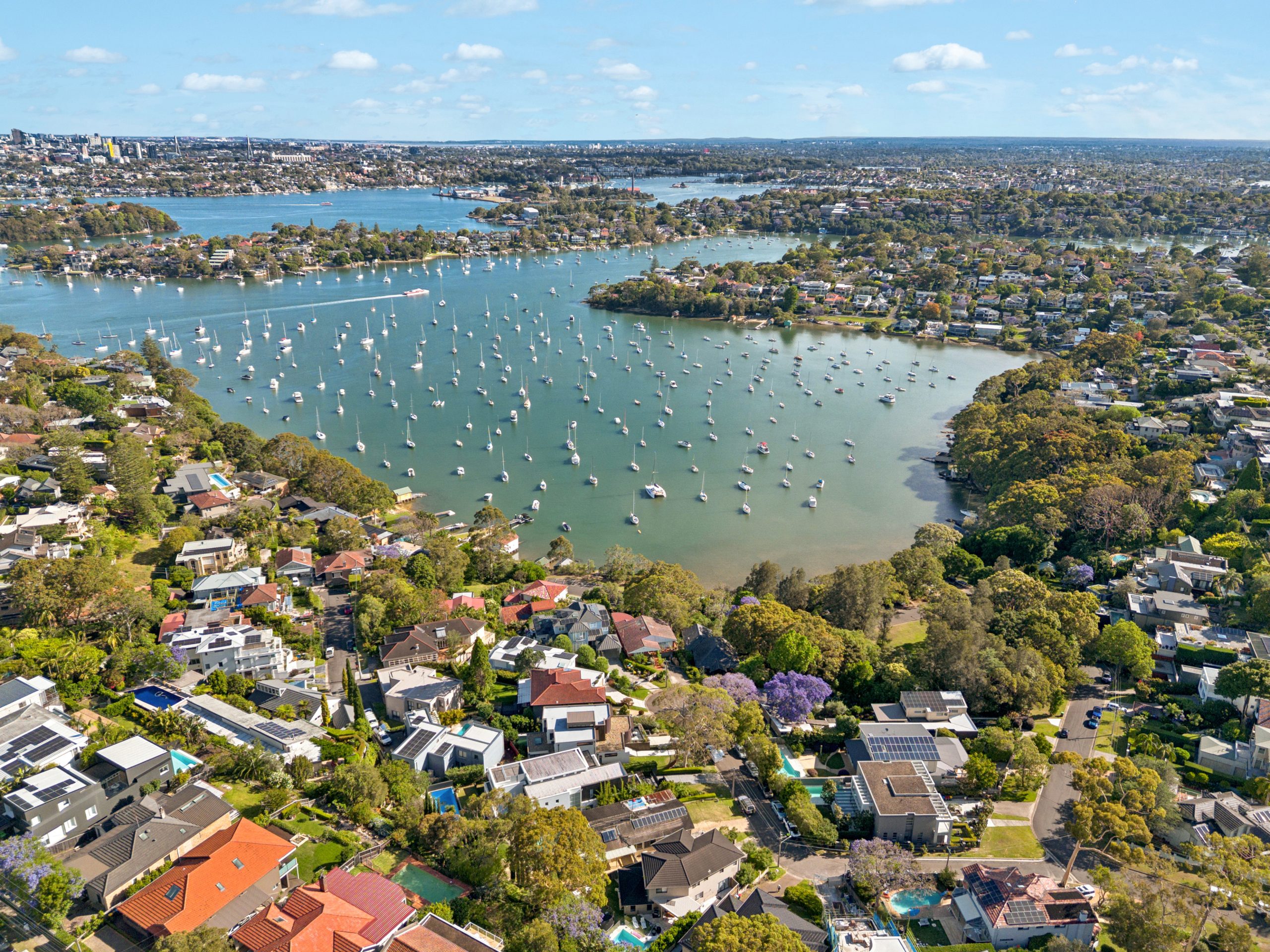
- Riverview, Longueville and Northwood share a peninsula geography that limits development, keeps traffic local and concentrates interest into a small pool of homes that rarely come to market.
- Respected schools, extensive bushland on the Lane Cove River and a weekday commuter ferry to Circular Quay continue to support buyer demand across the corridor.
- Because so few properties sell here each year, suburb medians swing sharply and tell you very little about an individual home. A property-specific appraisal is far more useful.
A Small Corridor That People Rarely Leave
Riverview, Longueville and Northwood sit on a compact stretch of the Lane Cove River, roughly nine kilometres north-west of the Sydney CBD, all within the Municipality of Lane Cove. Together they cover only a few square kilometres.
They also share an unusual degree of stability. At the 2021 Census, 89.4 per cent of homes in Longueville and 87.2 per cent in Northwood were owner-occupied, well above the Sydney average. These are suburbs where people settle rather than pass through.
Ella Elias was recently featured in a Sydney Morning Herald article on the Sydney suburbs where homeowners stay put the longest, where she shared her perspective on Northwood. The qualities she pointed to, a peaceful setting, natural beauty and a strong sense of community, apply across all three suburbs.
What follows is a closer look at the factors that keep drawing buyers to this pocket of the lower north shore.
Schools Draw Families to the Area
Families are a significant buyer group across the corridor and education is usually near the top of their list.
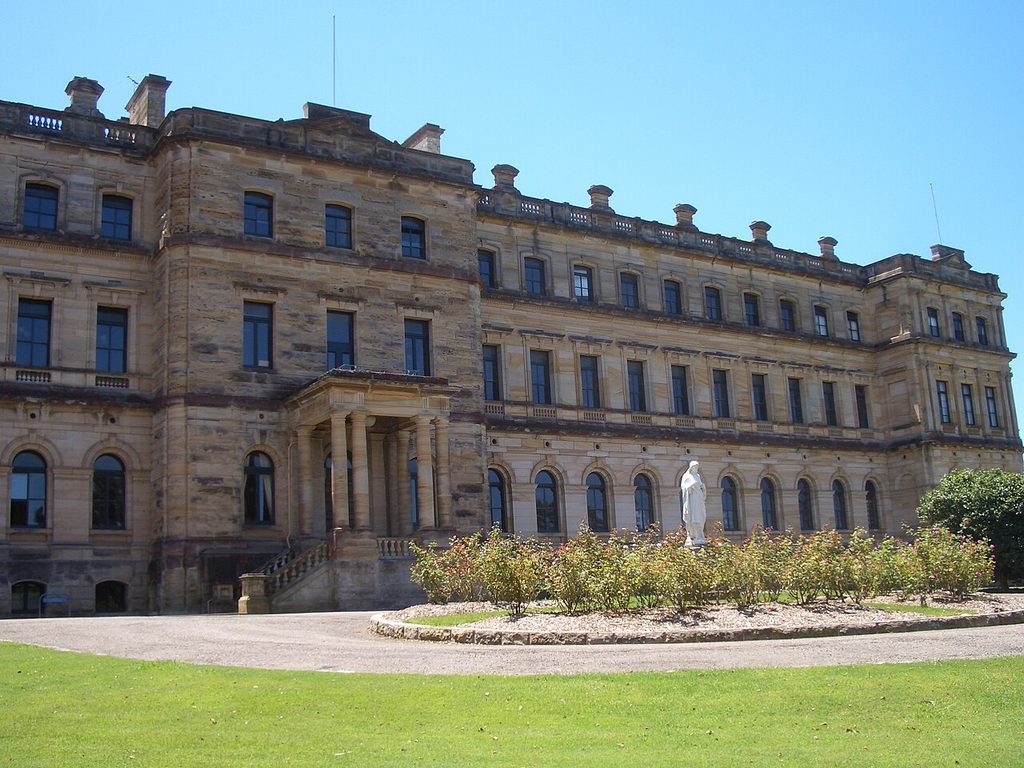
Saint Ignatius’ College Riverview sits at its centre. Founded in 1880 by the Jesuits, the college educates boys from Year 5 to Year 12 as both a day and boarding school, on grounds of more than 110 acres fronting Burns Bay and the Lane Cove River. Its rowing program has been part of the river’s rhythm since the 1880s.
A school of that scale shapes the area in practical ways. It holds a large tract of open land out of residential development, it brings a river-facing campus into daily view and it anchors a community of families who organise their weeks around the same calendar.
The corridor is also served by the ferry’s dedicated school runs, which carry students to Saint Ignatius’ College Riverview, St Aloysius’ College at Milsons Point and Loreto Kirribilli. Lane Cove Public School, Lane Cove West Public School and St Michael’s Catholic Primary School on Longueville Road are all within the immediate area, with Hunters Hill High School among the nearby secondary options.
One important note for buyers. NSW public school intake areas are set by residential address rather than by suburb name, and they are reviewed periodically. Anyone buying with a particular school in mind should confirm the current intake area for that exact address using the Department of Education’s School Finder, or by contacting the school directly.
Streets That Were Never Built for Volume
Geography did most of the work here.
All three suburbs sit on peninsulas and slopes running down to the Lane Cove River. Streets follow the contours rather than a grid. Blocks are irregular, many are steep and a good number finish at water or bushland instead of connecting through.
The practical result is very little through traffic. The streets around Tambourine Bay Road in Riverview, or the pockets running off Northwood Road, carry local cars and little else.
The housing stock reflects a long, slow build-out rather than a single development era. Federation homes, Californian bungalows, weatherboard cottages and contemporary architect-designed residences sit alongside one another, often on the same street. Mature street trees have had decades to fill in overhead.
Detached houses dominate. Apartment stock across the three suburbs is minimal, and the topography and established character leave limited scope for that to change quickly.
The Bush and the River Sit at the End of the Street
Green space in this corridor is part of daily life rather than a weekend excursion.
Warraroon Reserve, linking Riverview, Longueville and Lane Cove, is described by the Lane Cove Bushland and Conservation Society as holding the greatest diversity of plant species in the Lane Cove local government area, including endangered ecological communities. The walk from Tambourine Bay Park follows Tambourine Creek through rainforest vegetation, sandstone formations and tidal mangrove wetland where ibis, egrets and spoonbills feed.
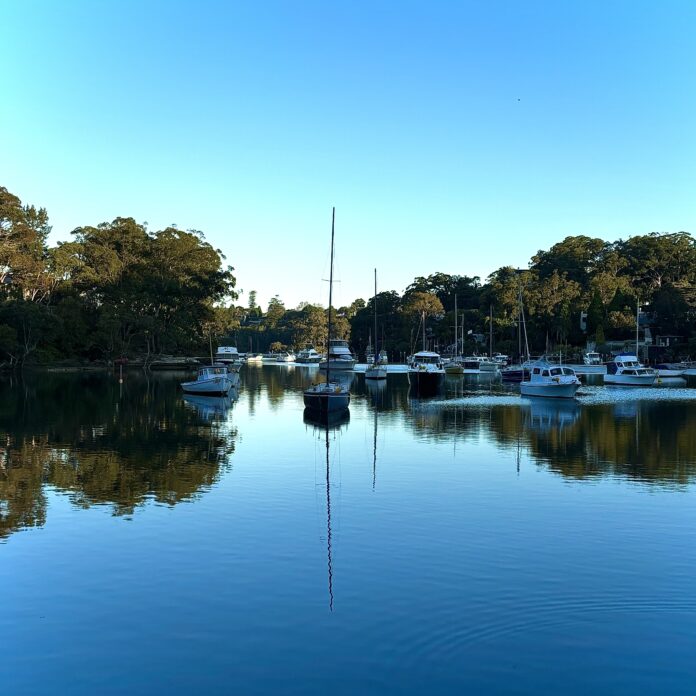
Burns Bay Reserve offers a sports field, a boat ramp and foreshore walking to the boundary of the Riverview campus. Aquatic Park and Amalfi Park in Longueville provide quiet riverside picnic settings with foreshore access. A track from the end of Richardson Street East in Northwood runs past mangroves, tidal flats and sandstone cliffs.
Lane Cove National Park sits a short drive upriver and adds a much larger reserve for walking, picnics and kayaking on the Lane Cove River.
For buyers moving from denser parts of Sydney, this is often the detail that settles the decision.
A Community With Its Own Rhythm
The community infrastructure here is long-established and still working.
The Longueville Sporting Club, known universally as The Diddy, was founded in 1938 and remains a bowling club, family venue and general meeting point. The North Shore Rowing Club, founded in 1879 and the oldest sporting club on the north side of Sydney Harbour, has operated from its shed just above Longueville Wharf since the 1930s.
Then there is the ferry. Captain Cook Cruises runs a commuter and school service along the Lane Cove River, calling at Northwood Wharf, Longueville Wharf and Riverview College Wharf, then continuing via Greenwich, Birchgrove and Balmain East to Circular Quay. On the current timetable, morning services run from Longueville to Circular Quay in roughly 23 to 25 minutes, and from Northwood in roughly 18 to 20 minutes.
It is worth being clear about what the service is. It operates Monday to Friday only, excluding public holidays, during morning and afternoon peak windows. It is a commuter and school service rather than an all-day option, so buyers should check the current timetable against their own routine.
Even so, a daily commute across open water changes how people feel about where they live. It also keeps the wharves in use as social spaces rather than as bare infrastructure.
Lane Cove village, a few minutes away, supplies the practical layer: supermarkets, the library, specialist grocers, cafes and the aquatic centre. Bus services along Longueville Road and River Road West connect through to the CBD, Chatswood and St Leonards. The commercial heart of the peninsula, Blaxlands Corner, gathers the club, shops and services at the meeting of Longueville Road, Northwood Road and River Road West.
What Continues to Support Buyer Demand
Several factors keep interest in this corridor steady, independent of where the wider market sits at any given moment.
Housing is tightly held. High owner-occupier rates and a settled, long-term resident base mean relatively few homes come to market in any given year.
Supply is structurally limited. Steep, irregular blocks, extensive foreshore reserve and a large school campus all constrain how much housing the area can accommodate.
Education access draws families in, and tends to keep them for the length of a school journey rather than a market cycle.
The natural setting is difficult to replicate. Foreshore bushland, river outlooks and quiet streets are fixed assets that no amount of development elsewhere can manufacture.
Proximity matters. Nine kilometres from the CBD, with bus, ferry and road access, places the corridor within easy reach of the city while feeling considerably further away.
A word of caution on price data. Recent sales results across these suburbs have been mixed, and because annual sale volumes are so low, published suburb medians can swing dramatically. Over the twelve months to May 2026, one provider recorded houses in Northwood up strongly on a handful of sales, while Longueville was recorded well down over the very same period. A median drawn from ten or twenty sales is easily distorted by one unusual result. Street, aspect, land size, water outlook and level access matter far more to the value of an individual home than any suburb-wide figure.
Buying and Selling Where Almost Nothing Lists
The practical consequence of a tightly held market is that many of the best homes change hands without a public campaign.
A vendor in Northwood or Longueville often prefers discretion. A buyer who has waited two years for the right street wants to hear about a property before it is advertised. Both sides are served by an agent who already knows the other.
At Ella Elias Property Group, that network has been built over years of attentive work across Riverview, Longueville, Northwood, Lane Cove, Gladesville and Hunters Hill. It is why a meaningful share of activity in this corridor happens quietly, through off-market introductions rather than open campaigns.
For sellers, that means reaching genuinely qualified buyers without exposing the home to a market that may not suit it. For buyers, it means seeing properties that others never do.
If you own in this corridor and are weighing your options, a complimentary appraisal is a sensible place to begin.
Frequently Asked Questions
What makes Riverview, Longueville and Northwood different from other lower north shore suburbs?
Their peninsula geography. Streets follow the river contours rather than a grid, which limits through traffic and caps how much housing the area can hold. Combined with school access and extensive foreshore bushland, this creates steady interest against a supply that stays flat.
Are these suburbs only suitable for families?
Families are a major buyer group, drawn by schools and land size. The corridor also holds long-term residents who have downsized within the area, and buyers who value the water outlook and the ferry commute. Housing styles vary considerably, from cottages to substantial waterfront residences.
How often do properties come up for sale here?
Rarely, by Sydney standards. Owner-occupier rates approaching nine in ten households mean these are settled suburbs, and only a modest number of homes reach the market each year. Buyers should expect to wait for the right property rather than choose from a wide field.
Do I need to be in a specific catchment to access local public schools?
Yes. NSW public school intake areas are set by residential address and administered by the NSW Department of Education, and boundaries are reviewed periodically. Confirm the current intake area for a specific address using School Finder or by contacting the school.
Why do published median prices for these suburbs vary so much?
Because sale volumes are very low. When only a small number of homes sell in a year, one exceptional result can move the median substantially, and different data providers measure over different periods. A property-specific appraisal is far more reliable than a suburb median.
How do I find out what my home in this corridor is worth?
A complimentary appraisal from an agent who knows these streets gives you a realistic figure based on comparable local sales, along with a clear view of current buyer interest before you commit to anything.
Glossary of Terms
Tightly held: A market where homes are owned for long periods and few properties come up for sale, which limits the stock available to buyers.
Owner-occupied: A home lived in by its owner rather than leased to a tenant. High owner-occupier rates generally indicate a stable, community-focused suburb.
Intake area (or catchment): The geographic area from which a NSW public school accepts enrolments as of right. Areas are set by residential address and administered by the NSW Department of Education.
Off-market: A property sold without a public advertising campaign, where buyers are introduced privately through an agency’s network.
Median sale price: The middle value of all properties sold in a period. In suburbs with few annual sales, the median can move sharply and should be treated with caution.
Sale volume: The number of properties sold in a given period. Low volumes make suburb-level statistics less reliable as a guide to individual property values.
Market appraisal: A professional assessment of a property’s likely sale value based on its features, condition, position and current local market conditions.

Contact Ella Elias Property Group for a confidential discussion
📞 02 9807 3688 📲 0419 290 000